Choosing the wrong 925 silver jewelry manufacturer costs far more than one bad batch. It costs your delivery dates, your margin, and eventually your standing with the retailers or brands you supply. A factory that misses a hallmark, ships tarnished pieces, or quietly raises prices after your first order can stall a whole season.
This guide walks through how B2B buyers actually separate a credible silver jewelry factory from a trading company with a glossy website. You will get the specific checks to run before you commit, the certifications that matter for your target market, and the red flags that should end a conversation early.
Why B2B Buyers Vet Silver Jewelry Manufacturers Differently
Retail shoppers judge a piece by how it looks. Wholesale buyers, brand owners, and online sellers have to judge the operation behind it. You are not buying one necklace. You are buying a supply relationship that has to hold up across reorders, seasonal spikes, and customs inspections in your destination country.
Three things change when you buy as a business, and each one maps to a specific vetting question you should be asking any prospective supplier.
Consistency Beats a Single Good Sample
Any factory can produce one perfect piece. The question is whether the 5,000th unit matches the first. Consistency comes from documented processes, stable alloy sources, trained production staff, and in-house finishing — not from a well-lit showroom. Ask how the factory keeps batch 2 identical to batch 1, and listen for specifics rather than adjectives.
Documentation Is Part of the Product
For the European and Middle Eastern markets in particular, nickel-release compliance, REACH registration, and assay records are not optional extras. They determine whether your goods clear customs. A supplier that cannot produce current, verifiable paperwork on request is a supplier whose goods may sit at a border — and whose paperwork problem becomes your cash-flow problem.
Your Manufacturer Shapes Your Lead Time
A factory with in-house casting, placage, and setting keeps the whole schedule under one roof. A middleman outsourcing each step adds handoffs you cannot see or control, and every handoff is a place where a rush order can quietly slip a week. If you are still deciding whether you need full custom manufacturing or off-the-shelf wholesale, read our guide to wholesale sterling silver jewelry sourcing first.
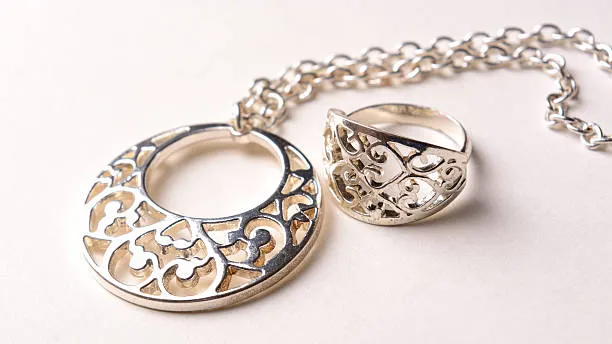
Verify the Metal, the Factory, and the Certifications
Three verification axes decide whether a supplier is real. Skip any one of them and you are gambling on the other two.
Confirming Genuine 925 Argent Sterling
Sterling silver is 92.5% pure silver alloyed with 7.5% other metal, généralement en cuivre, for strength. Pure 999 silver is too soft for most jewelry. Le “925” stamp is the industry marker, but a stamp alone proves nothing until you verify it. Ask any prospective manufacturer for:
- An assay or SGS test report for the specific alloy batch, not a generic certificate from five years ago.
- A sample you can test independently. A quick acid test or XRF scan at a local lab costs little and settles the question.
- Consistency across production runs. Confirm the alloy source is stable so batch 2 does not differ from batch 1.
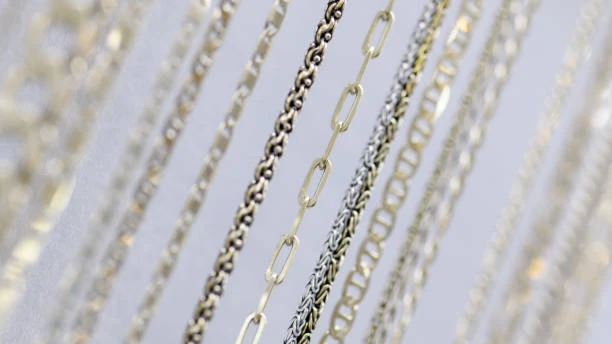
Substandard “argent” is often copper or brass with a thin plating. It tarnishes fast, triggers nickel-related skin reactions, and gets returned. Browse the full 925 silver jewelry catalog to see what properly alloyed and finished sterling silver looks like across categories.
Real Factory or Trading Company?
Plenty of “manufacturers” online are trading companies reselling other factories’ output. That is not automatically bad, but you should know which one you are dealing with, because it affects price, control, and lead time. Signals you are talking to a real factory:
- They can show the workshop floor, equipment list, and production lines on video or in person.
- They describe their own casting, polishing, placage, and setting steps with specifics.
- Their R&D or design team is in-house and can modify a CAD file for you.
- The address on the business license matches a production site, not just a sales office.
Signals you may be dealing with a trader: vague answers about equipment or staff count, prices that shift unpredictably between quotes, no customization beyond swapping a logo, and reluctance to arrange a factory visit or live video walkthrough.
Certifications That Matter by Market
Certifications are the fastest way to filter suppliers, because earning them requires an audit a trading company usually cannot pass. Different destinations care about different marks.
| Certification | What it proves | Matters most for |
|---|---|---|
| OIN 9001 | Documented quality management system | All markets |
| OIN 14001 | Environmental management | EU buyers, sustainability-led brands |
| SGS product testing | Independent lab verification of materials | EU, USA, Middle East |
| ATTEINDRE | EU chemical safety, incl. nickel & cadmium limits | European Union |
| UNE PERTURBATION / Sedex | Ethical labor and social compliance audits | Large retailers, EU chains |
| WCA | Workplace conditions assessment | USA and EU retail chains |
| UL | Safety compliance for specific components | North America |
A manufacturer holding several of these has invested in systems, not just marketing. One certificate hanging on a wall with no supporting audit trail is worth little. Ask to see the certificate numbers and verify them with the issuing body when the order value justifies it.
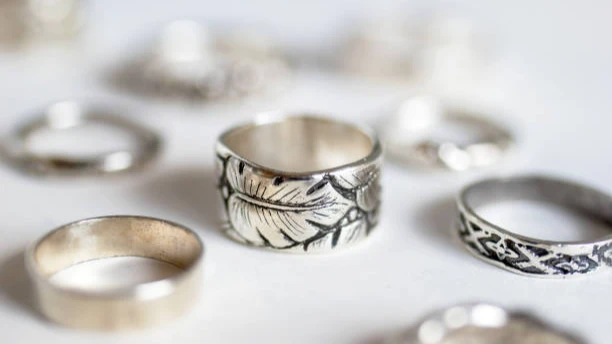
Looking for a Reliable 925 Fabricant de bijoux en argent?
Commercial Terms: MOQ, Sampling, and Lead Time
Commercial terms affect how easily you can test products, manage inventory, and plan future orders. Confirm these details before production and keep the agreed terms in writing.
| Term | What to confirm | Typical range across suppliers |
|---|---|---|
| Minimum order quantity | Per design or per order? Mixed designs allowed? Any minimum at all? | Pas de quantité minimale de commande (0-piece) on stock programs at genuine factories; 100–300+ per design on full custom is common |
| Sampling | Free or paid? Is CAD confirmation included? | Free CAD proof, free or credited sample before bulk |
| Lead time | Production days, plus rush options | Standard runs 15–35 days; rush service can drop to 7 working days |
| Price breaks | How unit cost falls as volume rises | Tiered pricing at clear quantity thresholds |
Minimum Order Quantity: Per Design or Per Order?
MOQ can have a major effect on how you build your first order. First, check whether the minimum applies per design or per total order. A 300-piece MOQ per design is very different from 300 pieces across several designs. Also ask whether mixed styles can count toward the same minimum.
This matters especially when testing a new collection or ordering several styles in one shipment. A flexible MOQ can reduce the need to commit too much inventory before you know which designs will sell. You can also read our guide to silver jewelry MOQ explained for more details.
Sampling and CAD Confirmation
Sampling gives buyers two opportunities to catch problems before a bulk order. UN CAD proof helps confirm dimensions, stone placement, proportions, and other design details before production. The physical sample then lets you check the finished piece, including its appearance, finish, and overall workmanship.
Before agreeing to a sample, confirm whether the cost is refundable or credited toward the bulk order. Also ask whether sample approval is required before production starts. These details can prevent a design issue from becoming a larger production problem.
Lead Time and Rush Options
Lead time should cover more than the number of days a factory needs to make the products. Ask when the production clock starts and what could affect the schedule, such as CAD approval, sample approval, material availability, or design changes.
It is also useful to ask whether rush production is available and what conditions apply. Par exemple, XH-Jewelry states that rush orders can be completed in as little as seven working days after sample approval, while its factory has a stated monthly production capacity of 260,000 pièces. Treat supplier timelines as order-specific commitments and confirm the final schedule before production begins.
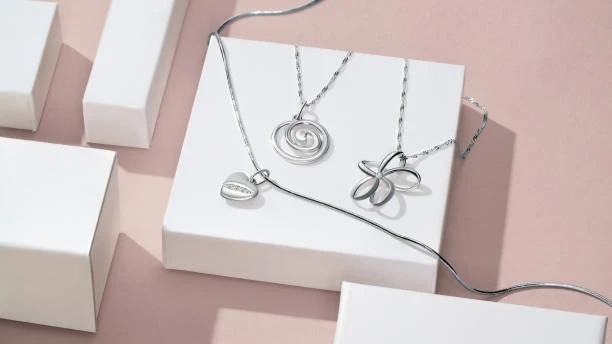
Quality Control and Design Capability
Verification does not stop at commercial terms. Two deeper capability checks separate a supplier who can hold your standard from one who can only hit it once.
Ask for the QC Process, Not the Promise
Every supplier claims strict quality control. Few can describe it. A credible manufacturer walks you through defined inspection stages rather than repeating an adjective. Look for a documented QC flow covering:
- Incoming raw material inspection before production starts
- In-process checks during casting and assembly
- Finished-product inspection for defects, weight, and dimensions
- Hallmarking and label verification
- Certification and assay documentation
- Packaging inspection
- Final audit before shipment
Ask where inspection happens and who signs off. Ask what the defect policy is: replacement, credit, or refund. A factory with a real QC system answers these without hesitation, because the process already exists on paper.
OEM or ODM: Which Model Fits Your Brand?
If you sell under your own brand, customization capability decides how differentiated your catalog can be. There are two working models:
- OEM — you supply the finished design; the factory manufactures to spec.
- ODM — the factory’s design team develops pieces for you, which you can brand as your own.
Strong manufacturers offer both, plus supporting services like laser engraving, custom plating finishes (rhodium, yellow gold, rose gold), stone setting, and branded packaging. If you are weighing which model suits your brand, our breakdown of OEM versus ODM jewelry manufacturing explains the trade-offs in full.
Test Their Design Team With a Sketch
A useful test: send a rough sketch and ask whether they can turn it into a CAD proof. A factory with a genuine in-house design team will do this readily and show you revisions. A trader or an under-tooled factory will either refuse, outsource silently, or come back with something that ignores your spec. This single exercise reveals more about design capability than any portfolio page.
Red Flags and a Practical Vetting Checklist
Two lists to keep open in a browser tab during any supplier conversation — one to walk away, one to sign off.
Red Flags That Should End the Conversation
Walk away if a supplier shows any of these:
- No verifiable certifications for your target market, especially REACH for the EU.
- Prices far below the market floor. Silver has a commodity cost. A quote that ignores it means thin plating, base metal, or a bait-and-switch later.
- Refusal to provide a sample or a testable alloy report.
- Pressure to pay 100% upfront with no sample stage and no milestone terms.
- Vague or shifting lead times with no production schedule.
- No physical address, no factory video, no verifiable business license.
None of these are negotiable for a serious buyer. One is a warning. Two or more is a pattern.
A Pre-Commitment Vetting Checklist
Use this before committing to any 925 silver jewelry manufacturer:
- Business license verified, factory address confirmed as a production site
- SGS or assay report available for the actual alloy
- Certifications match your destination market (REACH for EU, and so on)
- MOQ confirmed in writing, per design and per order — including whether a no-minimum policy applies
- Free sample and CAD proof available before bulk
- Documented multi-stage QC process, with a clear defect policy
- Lead time and rush options confirmed
- In-house OEM/ODM capability demonstrated on your own sketch
- References or case studies from buyers in your region
Start With a Conversation, Not a Commitment
A reliable supplier should make verification easy. Before placing a bulk order, review the manufacturer’s credentials, confirm commercial terms, and request a sample when possible.
XH-Jewelry has served wholesalers and custom jewelry brands since 2008. Learn more on our About page ou case studies, then request a sample and CAD proof to review pricing, MOQ, and lead time before committing.
Foire aux questions
How do I know a manufacturer is a real factory and not a trader?
Ask for a live video walkthrough of the workshop, the equipment list, and the factory address on the business license. A real factory shows production lines and in-house casting, placage, and setting. A trader usually cannot.
Do any 925 silver jewelry manufacturers really offer no MOQ?
Oui, but it is uncommon. Most factories still set a 100–300 piece minimum per design to recover casting, placage, and inspection setup costs. XH-Jewelry runs a No-MOQ (0-piece minimum) policy across both stock and custom programs, which lets a small buyer test a single design at any quantity before scaling. Always confirm in writing whether the minimum applies per design, per SKU, or per total order.
Which certifications matter for the European market?
REACH is essential for chemical and nickel-release compliance. SGS product testing and ISO 9001 add material and quality assurance. SMETA or Sedex supports the ethical-audit requirements many EU retailers impose.
Should I always order a sample first?
Oui. A sample plus a CAD proof before bulk production is the cheapest insurance you can buy. It lets you verify the alloy, finish, dimensions, and hallmark before thousands of units are made.
Can I sell the jewelry under my own brand?
Oui. Through OEM you supply the finished design and the factory builds to spec; through ODM the factory’s in-house team develops pieces you can brand as your own. Most manufacturers also offer laser engraving, custom plating, and branded packaging.