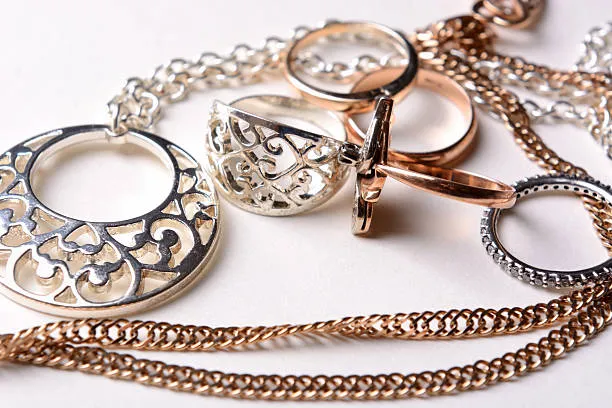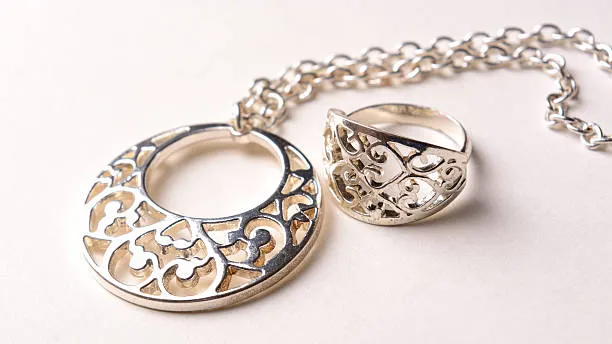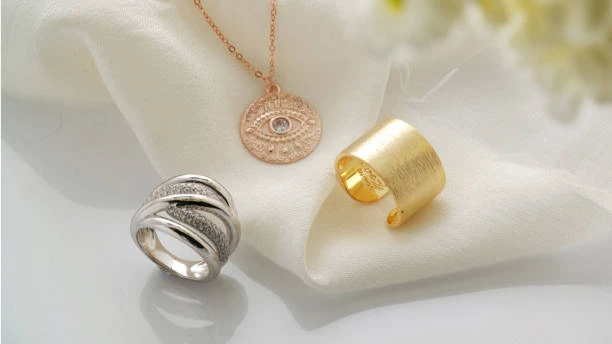
Private label jewelry and white label jewelry offer two different ways for brands to build a product line, with clear differences in design control, customization, minimum order quantities, lead times, and product exclusivity. Although the terms are often used interchangeably in supplier conversations, the two models can lead to very different buying and branding processes.
This guide explains how private label and white label jewelry differ in practice, including who controls the design, how much customization each model allows, and what type of buyer each approach suits. At XH & ARGENT, we manufacture under both models, so the comparison is based on actual production experience rather than textbook definitions.
Private Label vs. White Label Jewelry: The Core Difference
Before comparing costs or lead times, get the definitions straight — because the difference between the two models is not branding. It is design control.
Private label jewelry is manufactured to your specification: your design (or a design co-developed with the factory), your choice of materials, placage, and dimensions, produced to be sold under your brand. In a well-structured agreement, the design is reserved for you and cannot be listed by your competitors.
White label jewelry is the manufacturer’s existing design, produced once and offered to any number of resellers. You add your logo, tags, and packaging, but the underlying product is identical to what other buyers are selling — sometimes in the same marketplaces you list in.
| Aspect | Private Label Jewelry | White Label Jewelry |
|---|---|---|
| Design control | Your design, or co-created with the factory | Manufacturer’s existing catalog design |
| Exclusivity | Design reserved for your brand (per contract) | Same product sold to multiple resellers |
| Customization depth | Matériels, placage, stones, dimensions, packaging | Usually limited to logo, tags, and packaging |
| Minimum order | Quoted per project — confirm in writing before tooling | Low; ready-to-ship lines start at 30 pièces |
| Lead time | Longer — sampling and approval rounds come first | Short — in-stock designs ship as ordered |
| Best for | Brands building a distinct, defensible identity | Retailers testing markets or filling catalogs fast |
One caveat that surprises first-time buyers: exclusivity is a contract term, not a product feature. A private label program is only as exclusive as your supplier agreement makes it. If design ownership matters to your brand, get the exclusivity clause in writing before you pay for tooling.
What Private Label Jewelry Production Involves
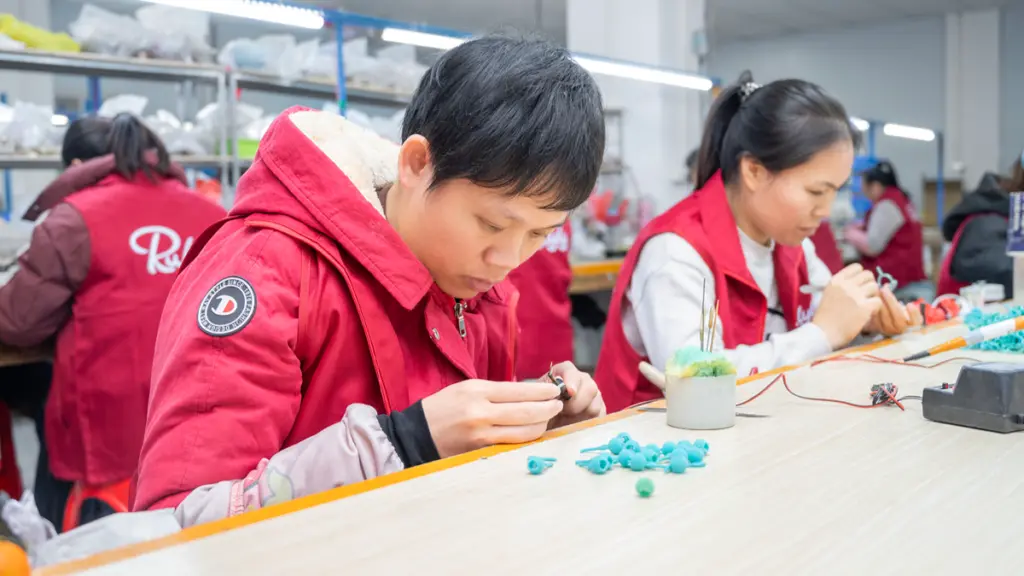
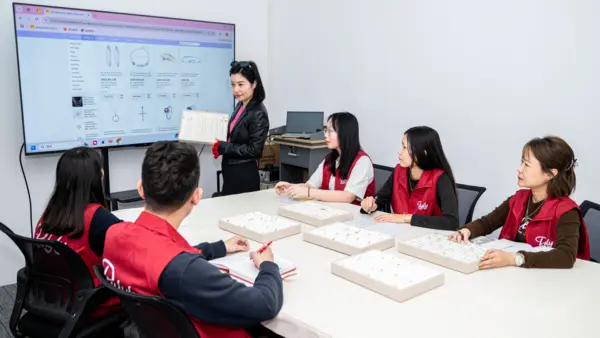
A private label program is a production project, not a purchase order. At our Guangzhou factory, a typical custom run moves through six stages:
- Design input. You bring the design — a tech pack, reference photos, or hand-drawn sketches. We regularly build production-ready CAD files from customer sketches alone, so a lack of formal drawings should not stop you from asking.
- CAD confirmation. Free CAD artwork is prepared and sent for your approval before anything is cut. You approve a render, not a verbal description of what the piece “should look like.”
- Sampling. A physical sample lets you check weight, finish, and wearability. We provide free samples at this stage — cheaper for you to reject a prototype than a production batch.
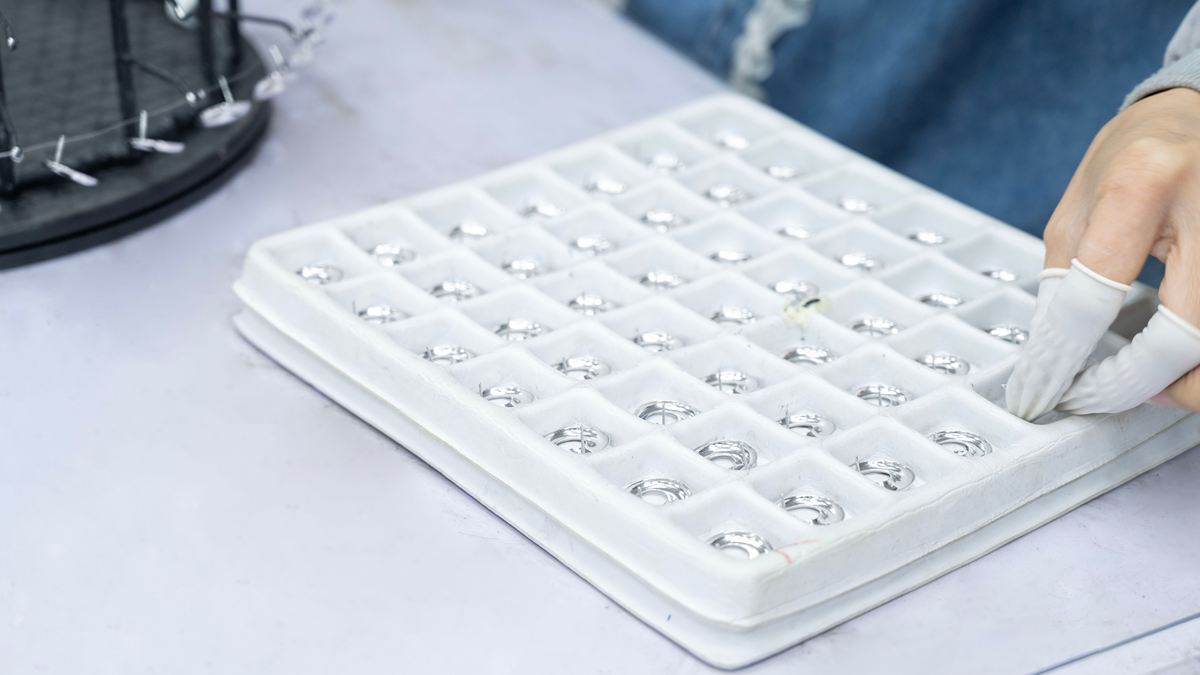
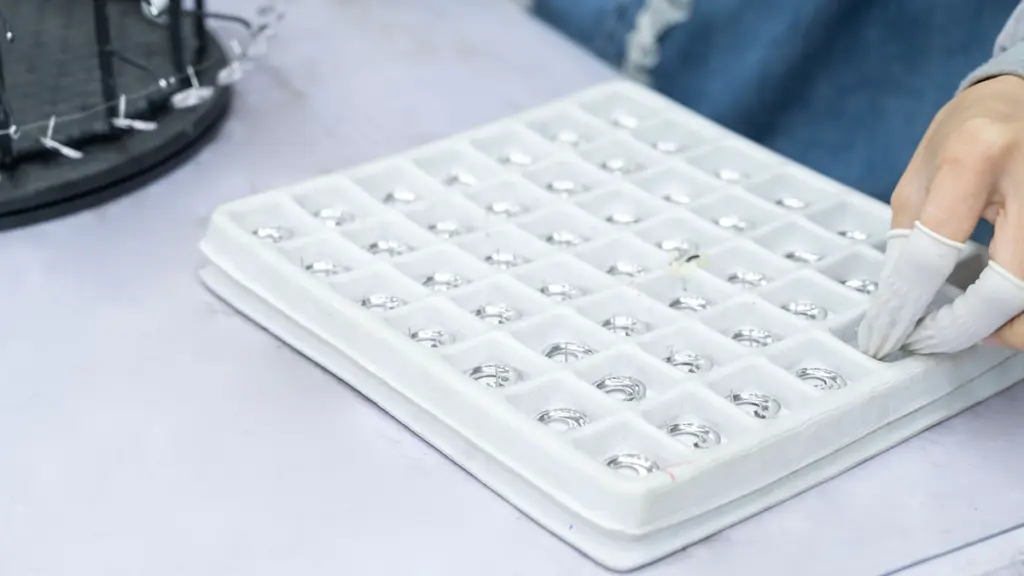
- Production with in-line QC. A nine-step quality process runs from incoming material inspection through in-process checks to a final pre-shipment audit, with identification, certificate, and packaging checks in between.
- Finition. Polissage (high-gloss, satin, brushed, or sandblasted), electroplating, laser engraving, and stone setting are all done in-house, so finishes stay consistent across reorders.
- Packaging and storage. Personalized packaging and warehousing support for OEM/ODM clients means your branded stock can ship on your sales schedule rather than the factory’s production schedule.
The practical implication for buyers: private label jewelry asks more of you as a client — design decisions, approvals, realistic timelines. What you get back is a product line that the next reseller cannot copy from the same catalog.
Ready to Build a Jewelry Line That Is Actually Yours?
When White Label Jewelry Is the Smarter Choice
White label is not the lesser option — it is a different tool. It wins when speed and cash flow matter more than uniqueness:
- You are testing a new niche. A catalog of ready-to-ship designs — at XH & ARGENT, more than 200 styles ship from stock, with new designs added every month — lets you list products in weeks instead of a full development cycle.
- Your per-SKU budget is tight. No tooling, no sampling rounds, no design amortization. You pay for product, not development.
- You sell across many categories. Online stores and traders juggling mixed catalogs can fill gaps from stock programs without managing a dozen custom projects in parallel.
- You need to react to trends. Monthly new arrivals mean you can chase a trend while it is still a trend; a private label response would arrive after the design, sampling, and approval cycle.
The trade-off is structural: the same design remains available to other resellers, so you compete on presentation, pricing, and audience rather than product uniqueness. That is the deal white label offers — and for many retailers, it is a good one. If you are weighing the broader sourcing picture, our wholesale sterling silver jewelry buyer’s guide covers pricing structures and supplier vetting in more depth.
How to Decide: Five Questions Before You Commit
- Can your customers tell your products apart from a competitor’s? If differentiation is the brand promise, private label is the only model that delivers it. If price and convenience carry the brand, white label is enough.
- How fast do you need sellable inventory? Stock programs ship as ordered; private label runs the full design-to-production cycle. Rush production at our factory completes in as few as seven working days once specifications are confirmed — but planning beats rushing.
- What is your true per-SKU cost tolerance? Private label spreads design, sampling, and tooling costs across your order quantity. At small volumes that premium stings; it shrinks as volumes grow and the design becomes uniquely yours.
- Have you confirmed the custom-order MOQ in writing? Custom minimums vary by project — complexity, materials, and finishes all move the number. Get it quoted against your actual design, not a general figure from a product page.
- Do your target markets require documented compliance? Buyers serving the EU, the US, and the Middle East increasingly audit their suppliers. Before signing, verify quality management (OIN 9001), environmental management (OIN 14001), social compliance (UNE PERTURBATION, WCA), and product-level certifications such as SGS and REACH.
What a One-Stop Partner Looks Like in Practice
Most jewelry businesses do not pick one model forever. A pattern we see across our client base — roughly 40% private-label wholesalers and another fifth online retailers and traders — is to launch with white label, learn which styles actually sell, then convert the proven winners into private label runs with exclusive designs and custom packaging.
That hybrid path is what a one-stop partner is built for. XH & SILVER has manufactured 925 sterling silver jewelry in Guangzhou since 2008: a 3,000 m² factory, 120 staff including a dedicated R&D team, and a monthly capacity of 260,000 pieces across necklaces, pendentifs, anneaux, boucles d'oreilles, and bracelets. OIN 9001, OIN 14001, UNE PERTURBATION, WCA, and UL certifications are in place, along with SGS and REACH product certifications.
If you are planning a private label jewelry program, our ODM/OEM service page details the customization workflow, and the sterling silver necklace category shows the finish quality you can benchmark your designs against.
Foire aux questions
What is the difference between private label and white label jewelry?
Private label jewelry is produced to your design and specification and sold exclusively under your brand. White label jewelry is a manufacturer’s existing design that multiple resellers can list under their own brands. The core difference is design control and exclusivity, not branding itself.
Is private label jewelry more expensive than white label?
Usually, yes — at small volumes. Private label spreads design, sampling, and tooling costs across your order, while white label amortizes development across many buyers. The per-piece premium narrows as your order quantities grow, and you gain a design competitors cannot stock.
What is a typical MOQ for white label silver jewelry?
Ready-to-ship designs at XH & SILVER start at 30 pieces per style. Private label and other custom orders are quoted per project, because complexity, materials, and finishes all affect the minimum — always confirm the number for your specific design in writing.
How long does private label jewelry production take?
It depends on design complexity and how quickly approvals move. As a reference point, rush production orders at our factory are completed in as few as seven working days once specifications are confirmed — plan additional time for CAD confirmation and sampling before mass production begins.
Can I get my own packaging with private label jewelry?
Oui. Personalized packaging is a standard part of private label programs, et XH & SILVER also offers warehousing support for OEM/ODM clients so branded stock can ship on your schedule. Many white label programs allow custom tags and packaging as well.
Which certifications should a private label jewelry manufacturer have?
At minimum, OIN 9001 for quality management. For exports to the EU, the US, and the Middle East, also look for ISO 14001, social compliance audits such as SMETA and WCA, and product-level certifications like SGS and REACH. XH & SILVER holds all of these — ask any supplier you evaluate for certificate copies, not just a badge on their website.